Buy aghiosnikolaos.eu ?
We are moving the project
aghiosnikolaos.eu .
Are you interested in purchasing the domain
aghiosnikolaos.eu ?
domain@kv-gmbh.de · 0541-91531010
Buy aghiosnikolaos.eu ?
What is grammatically correct: Cogito ergo sum or Ego cogito ergo sum?
The grammatically correct phrase is "Cogito ergo sum." This is the original Latin phrase coined by philosopher René Descartes, which translates to "I think, therefore I am." The phrase emphasizes the primacy of thought and self-awareness in establishing one's existence. **
What was Nietzsche's objection to Cogito ergo sum?
Nietzsche's objection to Cogito ergo sum, or "I think, therefore I am," stems from his belief that the self is not a fixed entity but rather a fluid and ever-changing construct. He argued that the idea of a stable and unified self, as implied by Descartes' statement, is an illusion. Nietzsche believed that the self is a product of various conflicting forces and influences, and that there is no essential core or unchanging identity to be found within it. Therefore, he rejected the notion that one's existence can be proven simply through the act of thinking. **


Similar search terms for Cogito
Top-Angebote
Products related to Cogito:
-
Uplift Curations 2 Piece Love Bird Salt & Pepper Shaker Set Wedding Favors, Party & Kitchen Decor Souvenirs 2 Piece Love Bird Salt & Pepper Shaker Set Wedding Favors, Party & Kitchen Decor SouvenirsAdd a charming touch to your table or event with this delightful love bird salt and pepper shaker set designed to double as dcor and functional tableware. Perfect for couples, hosts, and party planners, this set makes memorable wedding favors and...44,00 $*Shipping: 0,00 $Secure redirect to the provider
-
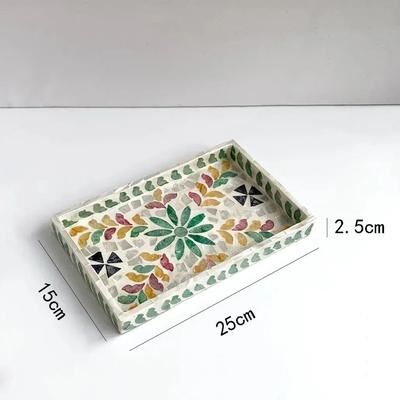
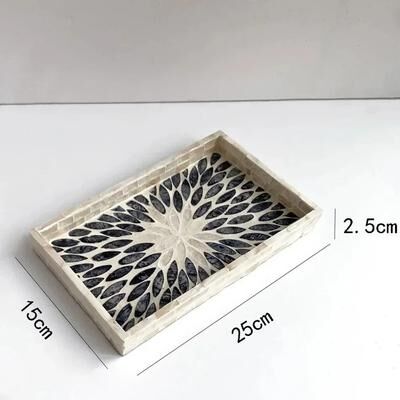
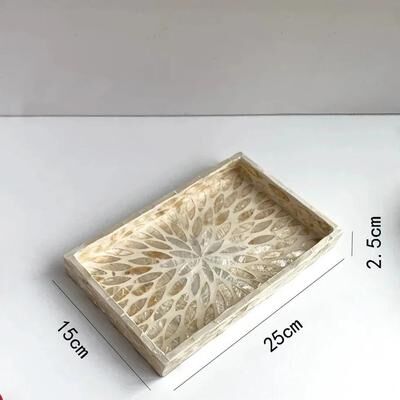
Inspire Select Handmade Colorful Shell Decorative Tray Rectangular Vanity Organizer & Jewelry Storage Board 4Add a touch of coastal elegance and artistry to your space with a beautifully crafted storage solution. Designed for those who appreciate both style and functionality, this piece keeps your essentials organized while enhancing your dcor. Each tray...159,95 $*Shipping: 0,00 $Secure redirect to the provider
-
Armoire Jewelry Cabinet Standing Jewelry OrganizerDescription This is our jewelry cabinet which is equipped with a big mirror and own a powerful storage capacity. It makes it easy to choose your jewelry in the morning without the frustration of looking for loose/missing pieces.305,49 $*Shipping: 0,00 $Secure redirect to the provider
-
Inspire Select Handmade Colorful Shell Decorative Tray Rectangular Vanity Organizer & Jewelry Storage Board 1Add a touch of coastal elegance and artistry to your space with a beautifully crafted storage solution. Designed for those who appreciate both style and functionality, this piece keeps your essentials organized while enhancing your dcor. Each tray...159,95 $*Shipping: 0,00 $Secure redirect to the provider



-
Do you find the Cogito ergo sum convincing?
As an AI language model, I don't have personal beliefs or experiences, but I can provide information. The phrase "Cogito ergo sum" (I think, therefore I am) is a fundamental concept in the philosophy of René Descartes. It suggests that the act of thinking proves one's existence. Some find this argument convincing because it provides a starting point for knowledge and certainty. Others may find it unconvincing because it relies on the assumption that thinking is the only way to prove existence, and it doesn't account for non-thinking beings. Ultimately, the persuasiveness of the Cogito ergo sum depends on one's philosophical perspective. **
-
Does anyone have a good term paper topic on the Cogito argument?
One potential term paper topic on the Cogito argument could be an analysis of its implications for the nature of self and consciousness. You could explore how Descartes' assertion "I think, therefore I am" shapes our understanding of the self and its relationship to thought. Another interesting angle could be to examine criticisms of the Cogito argument and evaluate whether it truly provides a solid foundation for knowledge. Additionally, you could investigate how the Cogito argument has influenced modern philosophy and its relevance in contemporary discussions on the mind-body problem. **
-
What is the difference between Cogito ergo sum and Dubito ergo sum?
The phrase "Cogito ergo sum" is a Latin phrase meaning "I think, therefore I am," which was famously coined by philosopher René Descartes. This phrase represents Descartes' assertion that the act of thinking proves one's existence. On the other hand, "Dubito ergo sum" is a Latin phrase meaning "I doubt, therefore I am." This phrase is a play on Descartes' original statement, and it emphasizes the role of doubt in the process of self-awareness and existence. While "Cogito ergo sum" focuses on the act of thinking, "Dubito ergo sum" emphasizes the act of doubting as a means of affirming one's existence. **
-
Does anyone have a good term paper topic for the Cogito argument?
One potential term paper topic for the Cogito argument could be an analysis of the implications of Descartes' famous statement "I think, therefore I am" on the nature of self and consciousness. This could involve exploring the relationship between thinking and existence, as well as the implications for the mind-body problem and the nature of reality. Another potential topic could be a critical evaluation of the Cogito argument in the context of contemporary philosophy, considering objections and alternative perspectives on the nature of self-awareness and existence. Finally, a term paper could explore the historical and cultural significance of the Cogito argument, examining its impact on the development of modern philosophy and its influence on broader intellectual and cultural movements. **
I don't understand the steps Descartes goes through to reach the conclusion Cogito ergo sum.
Descartes begins by doubting everything he knows in order to find a foundation of certainty. He realizes that even if he doubts everything, he cannot doubt the fact that he is doubting, which leads him to the realization that he must exist as a thinking thing. This leads to his famous conclusion, "Cogito, ergo sum," meaning "I think, therefore I am," asserting that his ability to doubt and think proves his existence as a thinking being. **
What is the history of Ego cogito ergo sum or I think, therefore I am?
The phrase "Cogito, ergo sum" or "I think, therefore I am" was famously coined by the French philosopher René Descartes in his work "Discourse on the Method" in 1637. Descartes used this statement as a foundational element in his philosophy to establish certainty in knowledge. He argued that doubt could be cast on everything except the act of doubting itself, which requires a thinking entity. This led him to conclude that the existence of a thinking self, or ego, is indubitable. The phrase has since become a fundamental concept in Western philosophy and epistemology. **
Top-Angebote
Products related to Cogito:
-
Urban Decay Vice Lipstick Reno-LocalDiscover the ultimate Vice Lipstick, a super-pigmented, longwear vegan lipstick designed to deliver high-impact, long-lasting color in a single, hydrating swipe. This creamy, moisturizing formula ensures your lips feel nourished and hydrated, forgetting dry, flaky lip concerns thanks to the infusion of aloe vera and avocado oil—ingredients known to be rich in antioxidants. Explore 35 Los Angeles-inspired shades, encompassing everything from sheer pink and everyday nude lipstick to bold bright orange and red lipstick, available in three vibrant and comfortable finishes: cream, matte, and shine. Upgrade your makeup routine with this essential, vegan lip color that offers comfy, even coverage and a smooth application, making it the perfect choice for on-the-go beauty lovers everywhere who demand quality and hydration in their long-lasting lipsticks. Ingredients: ISONONYL ISONONANOATE, OCTYLDODECANOL, OLEYL ERUCATE, SILICA, PHENYL TRIMETHICONE, POLYETHYLENE, SESAMUM INDICUM SEED OIL / SESAME SEED OIL, PARAFFIN, CI 77491 / IRON OXIDES, CI 77891 / TITANIUM DIOXIDE, PEG-45/DODECYL GLYCOL COPOLYMER, CERA MICROCRISTALLINA / MICROCRYSTALLINE WAX / CIRE MICROCRISTALLINE, DIMETHICONE, CI 77492 / IRON OXIDES, KAOLIN, CI 77499 / IRON OXIDES, SYNTHETIC WAX, DISTEARDIMONIUM HECTORITE, TOCOPHERYL ACETATE, DIMETHICONE CROSSPOLYMER, PENTAERYTHRITYL TETRA-DI-T-BUTYL HYDROXYHYDROCINNAMATE, PERSEA GRATISSIMA OIL / AVOCADO OIL, ALUMINUM HYDROXIDE, ISOPROPYL PALMITATE, ISOPROPYL MYRISTATE, TRIETHOXYCAPRYLYLSILANE, ALOE BARBADENSIS LEAF EXTRACT, TOCOPHEROL, HYDROGENATED PALM GLYCERIDES CITRATE, HELIANTHUS ANNUUS SEED OIL / SUNFLOWER SEED OIL, ROSMARINUS OFFICINALIS LEAF EXTRACT / ROSEMARY LEAF EXTRACT.24,00 £*Shipping: 2,95 £Secure redirect to the provider
-
ModernMart Cute Cat Claw Resin Tray Mold For DIY Coasters, Jewelry Dishes & Handmade Home Decor Cute Cat Claw Resin Tray Mold For DIY Coasters, Jewelry Dishes & Handmade Home DecorTurn your creative ideas into charming handmade pieces with this cat claw silicone mold designed for DIY lovers and resin artists. Whether you're crafting a cute jewelry tray, coaster, or decorative storage plate, this mold helps you create smooth,...34,97 $*Shipping: 0,00 $Secure redirect to the provider
-
Uplift Curations 2 Piece Love Bird Salt & Pepper Shaker Set Wedding Favors, Party & Kitchen Decor Souvenirs 2 Piece Love Bird Salt & Pepper Shaker Set Wedding Favors, Party & Kitchen Decor SouvenirsAdd a charming touch to your table or event with this delightful love bird salt and pepper shaker set designed to double as dcor and functional tableware. Perfect for couples, hosts, and party planners, this set makes memorable wedding favors and...44,00 $*Shipping: 0,00 $Secure redirect to the provider
-
Inspire Select Handmade Colorful Shell Decorative Tray Rectangular Vanity Organizer & Jewelry Storage Board 4Add a touch of coastal elegance and artistry to your space with a beautifully crafted storage solution. Designed for those who appreciate both style and functionality, this piece keeps your essentials organized while enhancing your dcor. Each tray...159,95 $*Shipping: 0,00 $Secure redirect to the provider
-
What is grammatically correct: Cogito ergo sum or Ego cogito ergo sum?
The grammatically correct phrase is "Cogito ergo sum." This is the original Latin phrase coined by philosopher René Descartes, which translates to "I think, therefore I am." The phrase emphasizes the primacy of thought and self-awareness in establishing one's existence. **
-
What was Nietzsche's objection to Cogito ergo sum?
Nietzsche's objection to Cogito ergo sum, or "I think, therefore I am," stems from his belief that the self is not a fixed entity but rather a fluid and ever-changing construct. He argued that the idea of a stable and unified self, as implied by Descartes' statement, is an illusion. Nietzsche believed that the self is a product of various conflicting forces and influences, and that there is no essential core or unchanging identity to be found within it. Therefore, he rejected the notion that one's existence can be proven simply through the act of thinking. **
-
Do you find the Cogito ergo sum convincing?
As an AI language model, I don't have personal beliefs or experiences, but I can provide information. The phrase "Cogito ergo sum" (I think, therefore I am) is a fundamental concept in the philosophy of René Descartes. It suggests that the act of thinking proves one's existence. Some find this argument convincing because it provides a starting point for knowledge and certainty. Others may find it unconvincing because it relies on the assumption that thinking is the only way to prove existence, and it doesn't account for non-thinking beings. Ultimately, the persuasiveness of the Cogito ergo sum depends on one's philosophical perspective. **
-
Does anyone have a good term paper topic on the Cogito argument?
One potential term paper topic on the Cogito argument could be an analysis of its implications for the nature of self and consciousness. You could explore how Descartes' assertion "I think, therefore I am" shapes our understanding of the self and its relationship to thought. Another interesting angle could be to examine criticisms of the Cogito argument and evaluate whether it truly provides a solid foundation for knowledge. Additionally, you could investigate how the Cogito argument has influenced modern philosophy and its relevance in contemporary discussions on the mind-body problem. **
Similar search terms for Cogito
-
Armoire Jewelry Cabinet Standing Jewelry OrganizerDescription This is our jewelry cabinet which is equipped with a big mirror and own a powerful storage capacity. It makes it easy to choose your jewelry in the morning without the frustration of looking for loose/missing pieces.305,49 $*Shipping: 0,00 $Secure redirect to the provider
-
Inspire Select Handmade Colorful Shell Decorative Tray Rectangular Vanity Organizer & Jewelry Storage Board 1Add a touch of coastal elegance and artistry to your space with a beautifully crafted storage solution. Designed for those who appreciate both style and functionality, this piece keeps your essentials organized while enhancing your dcor. Each tray...159,95 $*Shipping: 0,00 $Secure redirect to the provider
-
Inspire Select Handmade Colorful Shell Decorative Tray Rectangular Vanity Organizer & Jewelry Storage Board 2Add a touch of coastal elegance and artistry to your space with a beautifully crafted storage solution. Designed for those who appreciate both style and functionality, this piece keeps your essentials organized while enhancing your dcor. Each tray...159,95 $*Shipping: 0,00 $Secure redirect to the provider
-
Inspire Select Handmade Colorful Shell Decorative Tray Rectangular Vanity Organizer & Jewelry Storage Board 3Add a touch of coastal elegance and artistry to your space with a beautifully crafted storage solution. Designed for those who appreciate both style and functionality, this piece keeps your essentials organized while enhancing your dcor. Each tray...159,95 $*Shipping: 0,00 $Secure redirect to the provider
-
What is the difference between Cogito ergo sum and Dubito ergo sum?
The phrase "Cogito ergo sum" is a Latin phrase meaning "I think, therefore I am," which was famously coined by philosopher René Descartes. This phrase represents Descartes' assertion that the act of thinking proves one's existence. On the other hand, "Dubito ergo sum" is a Latin phrase meaning "I doubt, therefore I am." This phrase is a play on Descartes' original statement, and it emphasizes the role of doubt in the process of self-awareness and existence. While "Cogito ergo sum" focuses on the act of thinking, "Dubito ergo sum" emphasizes the act of doubting as a means of affirming one's existence. **
-
Does anyone have a good term paper topic for the Cogito argument?
One potential term paper topic for the Cogito argument could be an analysis of the implications of Descartes' famous statement "I think, therefore I am" on the nature of self and consciousness. This could involve exploring the relationship between thinking and existence, as well as the implications for the mind-body problem and the nature of reality. Another potential topic could be a critical evaluation of the Cogito argument in the context of contemporary philosophy, considering objections and alternative perspectives on the nature of self-awareness and existence. Finally, a term paper could explore the historical and cultural significance of the Cogito argument, examining its impact on the development of modern philosophy and its influence on broader intellectual and cultural movements. **
-
I don't understand the steps Descartes goes through to reach the conclusion Cogito ergo sum.
Descartes begins by doubting everything he knows in order to find a foundation of certainty. He realizes that even if he doubts everything, he cannot doubt the fact that he is doubting, which leads him to the realization that he must exist as a thinking thing. This leads to his famous conclusion, "Cogito, ergo sum," meaning "I think, therefore I am," asserting that his ability to doubt and think proves his existence as a thinking being. **
-
What is the history of Ego cogito ergo sum or I think, therefore I am?
The phrase "Cogito, ergo sum" or "I think, therefore I am" was famously coined by the French philosopher René Descartes in his work "Discourse on the Method" in 1637. Descartes used this statement as a foundational element in his philosophy to establish certainty in knowledge. He argued that doubt could be cast on everything except the act of doubting itself, which requires a thinking entity. This led him to conclude that the existence of a thinking self, or ego, is indubitable. The phrase has since become a fundamental concept in Western philosophy and epistemology. **
* All prices are inclusive of VAT and, if applicable, plus shipping costs. The offer information is based on the details provided by the respective shop and is updated through automated processes. Real-time updates do not occur, so deviations can occur in individual cases. ** Note: Parts of this content were created by AI.